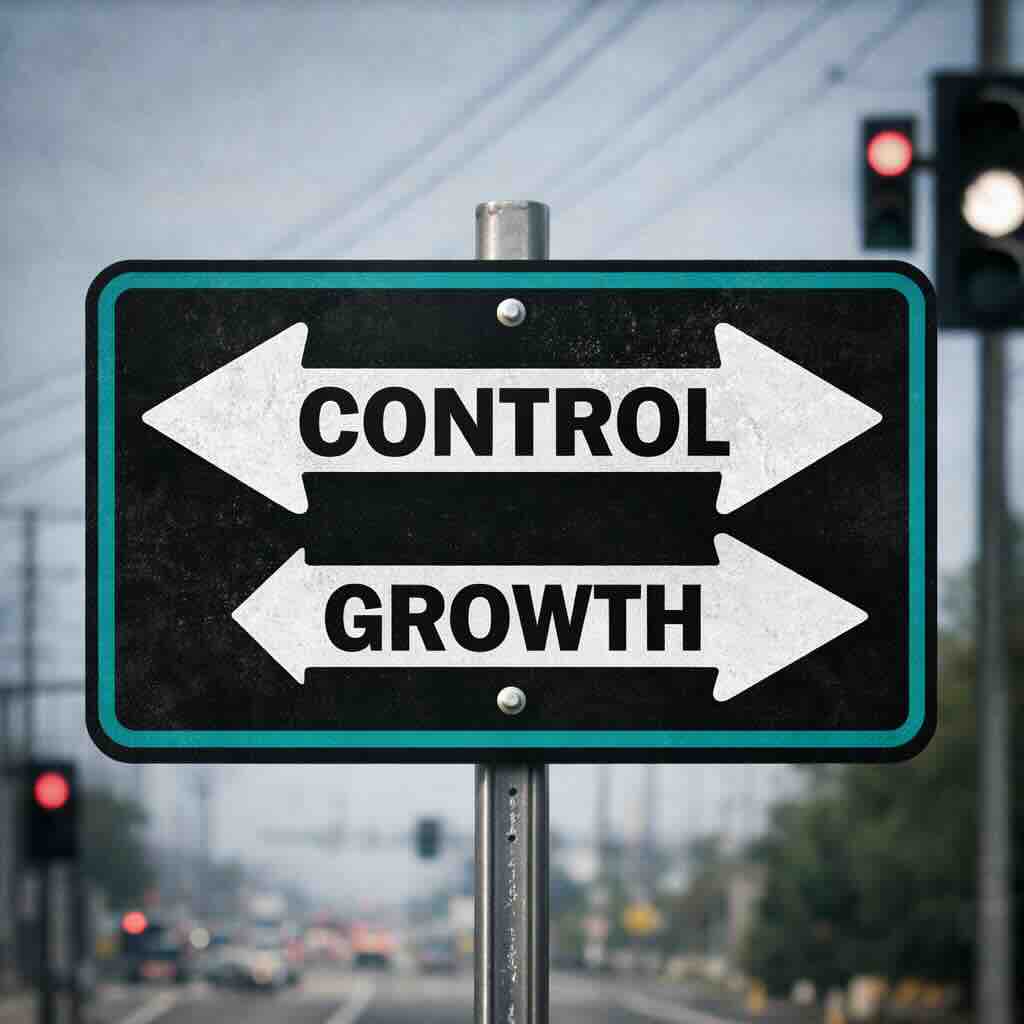
Let's talk about the most uncomfortable truth in entrepreneurship: the exact qualities that made you successful at building your company are now the ones holding it back.
I know. You don't want to hear it. But stick with me.
The Skills That Got You Here
You started this company because you were willing to do whatever it took. You answered customer emails at 2 AM. You personally closed every sale. You obsessed over every detail because if you didn't, who would?
You were scrappy, relentless, and hands-on. You made decisions fast because you had to. You controlled everything because you couldn't afford mistakes. You were the only one who truly understood the vision, so naturally, everything ran through you.
And it worked. You went from zero to something real. You built a client base, hired a team, generated revenue. You proved the doubters wrong.
Congratulations. Genuinely. That's no small feat.
The Plot Twist
But here's where it gets interesting. All those skills that got you to this point? They're now actively working against you.
That hands-on approach that made you indispensable in the early days? It's now making you the bottleneck. Your team can't make a move without you, which means growth is capped at your personal capacity.
That obsessive attention to detail that ensured quality when you were small? It's now micromanagement that's crushing your team's autonomy and teaching them not to think for themselves.
That fast decision-making that let you pivot and adapt when you were nimble? It's now impulsive leadership that bypasses the very systems you need to scale.
You're still operating like you're a scrappy startup, except you're not anymore. You're a growing company. And the rulebook just changed on you.
The Identity Crisis
This is the part that really messes with founders. Your entire self-concept is built on being the person who gets things done. The problem-solver. The closer. The one who cares the most.
And now someone is telling you that the best thing you can do for your company is to... do less?
It feels wrong. It feels like giving up. It feels like you're becoming one of those disconnected executives you swore you'd never become.
But here's the thing: stepping back isn't the same as checking out. Delegating isn't abdication. Building systems isn't bureaucracy.
It's evolution. And if you don't evolve, your company won't either.
The Shift Nobody Warns You About
When you started, your job was to do everything. When you're scaling, your job is to build the systems so that you don't have to do everything.
Early on, your value was in execution. Now, your value is in strategy, vision, and creating an environment where your team can execute without you.
You used to be the person with all the answers. Now you need to be the person who asks the right questions and then trusts your team to find the answers.
This isn't a demotion. It's a completely different job. And it requires completely different skills.
The Hard Part
The hardest part of this transition? Watching someone do your old job at 80% of your capability and resisting the urge to jump in and "fix" it.
Because here's what you need to understand: 80% done by someone else is infinitely more scalable than 100% done by you.
When you do it, it's perfect, but it doesn't scale. When they do it, it's good enough, and it frees you up to focus on the things that actually grow the business.
Your job isn't to be the best at everything anymore. Your job is to build a team that collectively is better than you at everything.
So What Do You Do?
First, recognize that this is normal. Every successful founder goes through this. You're not broken. Your skills aren't suddenly worthless. They're just... for a different stage now.
Second, start letting go. Systematically. Identify the tasks that don't require your unique expertise and hand them off. Document your processes so they're not trapped in your head. Teach your team to make decisions without you.
Third, get comfortable with good enough. Perfect is the enemy of scalable. If you're waiting for your team to do things exactly the way you would, you'll be waiting forever.
And finally, redefine what success looks like for you. It's no longer about how much you can personally accomplish. It's about how much your company can accomplish without you.
Because the ultimate measure of your success as a founder isn't how indispensable you are. It's how well the company runs when you're not there.
That's the paradox. The skills that made you essential need to evolve so you can become optional. And being optional? That's when you've truly succeeded.